
Frozen pipes in an old Westchester house, and how to stop them
Which pipes actually freeze in a Rivertowns house, what to do before the first hard freeze, and what to do if one is already frozen but has not split yet.
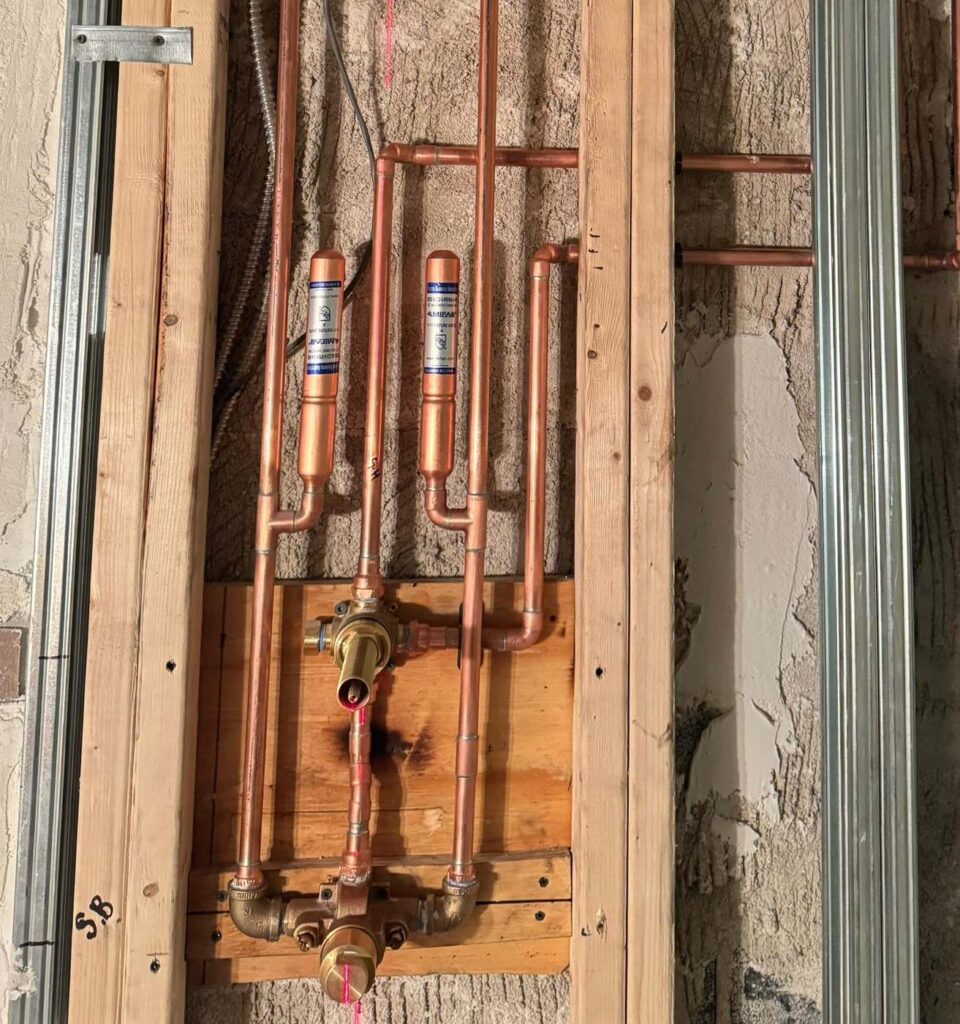
Frozen pipes are not really a cold-weather problem. They are a building problem that cold weather finds. The houses around here are full of places where a water line runs through somewhere nobody heats, and those lines sit there fine for years until the first night it drops into the teens and stays there.
This is what actually freezes in a Rivertowns house, what to do about it before the cold arrives, and what to do if you already have a pipe that has stopped running.
Where frozen pipes actually happen
It is almost never the middle of the house. In the older housing stock here it is the same handful of places, year after year:
- Additions. A kitchen or bathroom added onto a 1920s house, where the new piping runs through a wall or floor that was an exterior surface before the extension went on.
- Unheated crawl spaces. Especially where a vent was left open, or insulation has fallen away from the underside of the floor.
- Exterior walls. A kitchen sink on an outside wall is the classic one — the cabinet underneath it traps cold and keeps the room’s heat out.
- Garages and unheated basements. Any run crossing open space with no insulation on it.
- Hose bibs. The outdoor spigot and the foot or two of pipe behind it, which is the single most common place a split shows up in spring.
Before the first hard freeze
All of this is a weekend afternoon, and all of it is cheaper than the alternative.
- Drain and shut off the outdoor spigots. Close the valve indoors that feeds each hose bib, then open the spigot outside and leave it open so anything left in the pipe can drain and has room to expand.
- Disconnect hoses. A hose left attached holds water against the bib and defeats the drain.
- Find your main shut-off and make sure it turns. Usually where the water service enters the basement, often beside the meter. If it has not been moved in ten years it may be seized, and the night a pipe splits is the worst possible time to discover that.
- Keep the meter warm too. In Yonkers the city’s Water Bureau says property owners are responsible for protecting both their pipes and the water meter from freezing. Leave the door to the meter room or cabinet open, and if the meter is in an outdoor pit, check that the cover fits and is not cracked.
- Insulate the exposed runs. Foam sleeve on anything crossing a crawl space, a garage or an unheated basement. It will not save a pipe on its own in a deep freeze, but it buys hours.
- Close crawl space vents and seal the obvious gaps where outside air is getting to the pipes.
- Have the heating looked at before you need it. Frozen pipes and a dead boiler usually arrive together, because the thing that stopped the heat is the reason the house got cold enough.
During a cold snap
Once it is genuinely cold, frozen pipes are a matter of hours rather than days, and the house is already working against you. Four things help, and none of them cost anything.
- Let a faucet trickle on the run you are worried about — the furthest one from where the water comes in. Moving water is much harder to freeze, and the open faucet gives expanding ice somewhere to go.
- Open the cabinet doors under a sink on an exterior wall so room heat reaches the pipes.
- Leave the heat on if you go away. Turning it off to save money over a week away is how people come home to a ceiling on the floor. Keep it low rather than off.
- Do not set the thermostat back hard overnight during a deep freeze. The coldest hours are exactly when the house needs the heat.
If a pipe is already frozen but has not burst
You will know because a faucet gives you nothing, or a thin dribble, while the others are fine. There is a window here where frozen pipes are still a nuisance rather than a flood, and what you do next decides which.
- Find the main shut-off first and be ready to use it. If the pipe has already split, the damage starts the moment the ice melts — not while it is frozen.
- Open the faucet that the frozen line feeds. It gives the melt somewhere to go and tells you the moment it starts running.
- Warm it gently and along its length — a hair dryer, a heat gun on low, towels soaked in hot water. Start at the faucet end and work back toward the cold section.
- Never use a propane torch or any open flame. People set houses on fire doing this every winter, and it also boils the water inside the pipe and can burst it outright.
- Do not leave it to thaw on its own and go to bed. If it has split, you want to be standing there.
If water is already coming out, that is a different piece of work: shut the main off, then call. burst pipe repair and an emergency plumber are what you need at that point, any hour.
What not to do with frozen pipes
- Do not pour boiling water over a frozen pipe. Sudden heat on a cold pipe is a good way to split it.
- Do not leave space heaters unattended in a crawl space or against a wall to thaw something out.
- Do not assume it thawed and all is well. Check the ceiling below and the floor around it over the next day — a slow split can take hours to show.
- Do not ignore a faucet that ran slow last winter. It is telling you where your frozen pipes will be this winter, and that is the run to insulate now.
When to call a plumber
Most frozen pipes thaw out and are never heard about again. Call if the pipe will not thaw, if you cannot find the frozen section, if your main shut-off will not turn, or if more than one fixture has stopped at once. That is frozen pipe repair, and it is a smaller job before the pipe splits than after. Call sooner if the house is cold as well, because then it is the heating that needs fixing first and boiler repair is the actual job.
KBD Plumbing & Heating works across lower Westchester — Dobbs Ferry, Hastings-on-Hudson, Irvington, Yonkers and the rest. Licensed and insured, price agreed before work starts, and the phone is answered any hour including holidays: (914) 233-3000.
Services in this article
Frozen & burst pipe repair
Frozen pipe repair across Westchester at any hour: frozen runs thawed without flame and checked for splits, and burst pipe repair when the pipe has already given way.
Emergency plumbing
Need an emergency plumber in Westchester? Water you can’t stop, sewage backing up, a gas smell or no heat in freezing weather: what counts, what to do first, and who to call at any hour.
Boiler repair
Boiler repair across Westchester for gas, hot water and steam systems — no heat, no hot water, leaks, noise, pressure loss and boilers that lock out and will not restart.
5.0 from 4 customer reviews on Thumbtack
- Top Pro 2025 on Thumbtack
- Background checked
Terrific — smart, professional, honest. Very experienced problem solver. I was very impressed with his skills and troubleshooting ability.
Arrived on time, diagnosed the problem quickly and had everything repaired in no time. The work was clean and professional.
Based in Dobbs Ferry, across lower Westchester
Just outside these towns? Call anyway and we’ll tell you straight whether we can help.