
Water heater leaking? Find where the water is coming from first
What to do first when your water heater is leaking, how to find where the water is actually coming from, and which leaks are a repair and which mean a new heater.
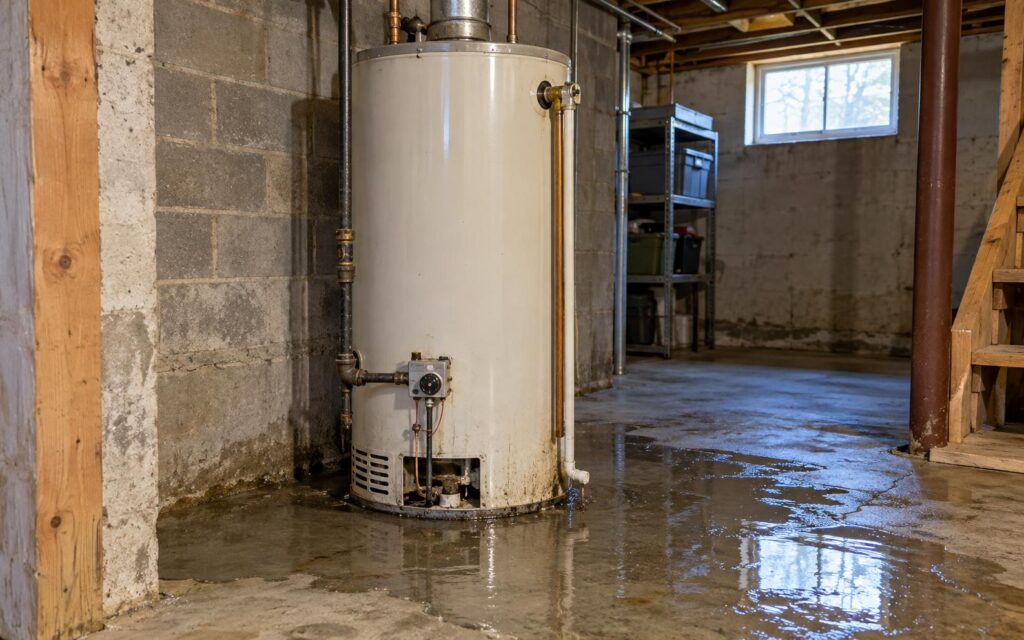
A water heater leaking onto the basement floor looks like one problem, but it can be several, and only one of them means the heater is finished. The water can be coming from a fitting on top, from the relief valve, from the drain valve at the bottom, from the tank itself, or from condensation that is not a leak at all. Make it safe first, then find the source. The source decides whether this is a repair or a new heater.
First, make it safe
Whatever the cause, a water heater that is leaking should be made safe before anyone starts looking for the source:
- Turn off the heat source. On a gas heater, turn the gas control on the unit to off, following the instructions on its label. On an electric heater, switch off its breaker. If the floor around the electrical panel is wet, do not stand in water to reach it; call instead.
- Close the cold water supply to the heater, the valve on the cold pipe going into the top of the tank. If it will not turn, do not force it. Close the house’s main valve instead; our guide to the water shut-off valve shows where it usually is.
- Leave the tank itself alone. Do not open the drain valve or try to empty a tank you suspect is failing. The water inside can be scalding hot.
- Protect what is nearby. Move boxes and anything else that can be damaged, and put down towels or a pan.
Where is the water heater leaking from?
Water runs downhill, so a puddle under the tank does not prove the tank is leaking. Dry the area, wait, and look with a flashlight, starting at the top and working down. Check the pipes above the heater too: a dripping pipe or valve overhead, or a boiler next to it, can drip onto the heater and make it look like the culprit.
Leaking from the top: fittings and connectors
The hot and cold connections on top of the tank, the flexible connectors or pipe attached to them, and the cold supply valve itself are all places where a slow drip can start. Corrosion at a joint shows as green or white crust, or as rust. A leak up here often runs down the side of the jacket and pools at the base, so it looks like the water heater is leaking from the bottom.
These are repairs, not a reason to replace the heater, as long as the tank itself is sound.
Leaking from the relief valve: heat, pressure and a missing expansion tank
The temperature and pressure relief valve is the safety valve near the top of the tank, with a pipe running down the side toward the floor. Water coming out of that pipe means the valve has opened, and it opens for one of two reasons:
- It is doing its job. The pressure or the temperature in the tank went too high. Water expands as it heats, and if the incoming water passes through a pressure reducing valve, a backflow preventer or a check valve, the expanding water has nowhere to go. That is called a closed system, and the usual answer is a thermal expansion tank on the cold supply.
- The valve is worn and weeps even when the pressure is normal. Then the valve itself is replaced.
Never cap, plug or remove the relief valve or its discharge pipe to stop the drip. The valve is there to stop a tank from failing under pressure, and the drip is telling you something.
Leaking from the bottom: drain valve or the tank itself
At the bottom of the heater there are two possibilities, and they lead to very different answers:
- The drain valve. This is the faucet-shaped valve near the base. If water drips from its outlet or around its stem, the valve is the problem, and a drain valve can sometimes be replaced without replacing the heater. Do not open it to test it.
- The tank. If the drain valve is dry and water is seeping from under the jacket, from the base, or from a rust streak on the tank, the inner tank has started to fail. A tank leaking through its own wall cannot be patched, and the answer is a new heater: water heater installation.
Not a leak at all: condensation
Sometimes a water heater seems to be leaking and is not. When a gas water heater fills with very cold water, for example after a lot of hot water has been used, moisture from the burner can condense on the cold tank and drip, sometimes with a sizzle on the burner. In a humid basement, cold water pipes overhead can also sweat and drip onto the heater. If the dripping stops once the tank has heated back up, condensation is the likely answer. If it keeps going, look again.
Repair or replace?
Whether a water heater leaking means a repair or a new heater depends on where the water comes from:
- Usually a repair: leaking fittings or connectors, a worn relief valve, a missing expansion tank, a drain valve. These are parts, and the heater can keep working. That is water heater repair.
- Replacement: water coming from the tank itself. There is no repair for a tank leaking through its wall, and the leak only gets worse. That is water heater installation.
- The judgment call: an older heater with a part failing. The date is usually in the serial number on the label, and the older the heater, the less sense a repair makes. We tell you which we would do, and why, before any work starts, and the decision is yours.
If replacement is on the table, it is also the moment to ask whether a tankless water heater would suit the house.
In a two-family, co-op or apartment
If you rent, tell the landlord or the super before anything else; a water heater leaking in one apartment can reach the one below. A two-family house may have a heater for each apartment or one shared heater. In a co-op or condo, who replaces the tank can depend on the building’s rules, so check with the managing agent first. We provide a certificate of insurance on request, for buildings that need one before a contractor starts.
When to call about a water heater leaking
Call if the water is coming from the tank itself, if the relief valve keeps discharging, if you cannot find the source, or if you cannot shut the water off to the heater. If water is spreading and you cannot stop it, that is an emergency plumber call, and the phone is answered at any hour. If the heater turns out to be dry and the water is coming from somewhere else, that is leak detection. And if the heater has also stopped making hot water, our guide to no hot water covers the rest.
KBD Plumbing & Heating works across lower Westchester — Dobbs Ferry, Hastings-on-Hudson, Irvington, Yonkers, White Plains and the rest. Licensed and insured, price agreed before work starts, and the phone is answered any hour including holidays: (914) 233-3000.
Services in this article
Water heater repair
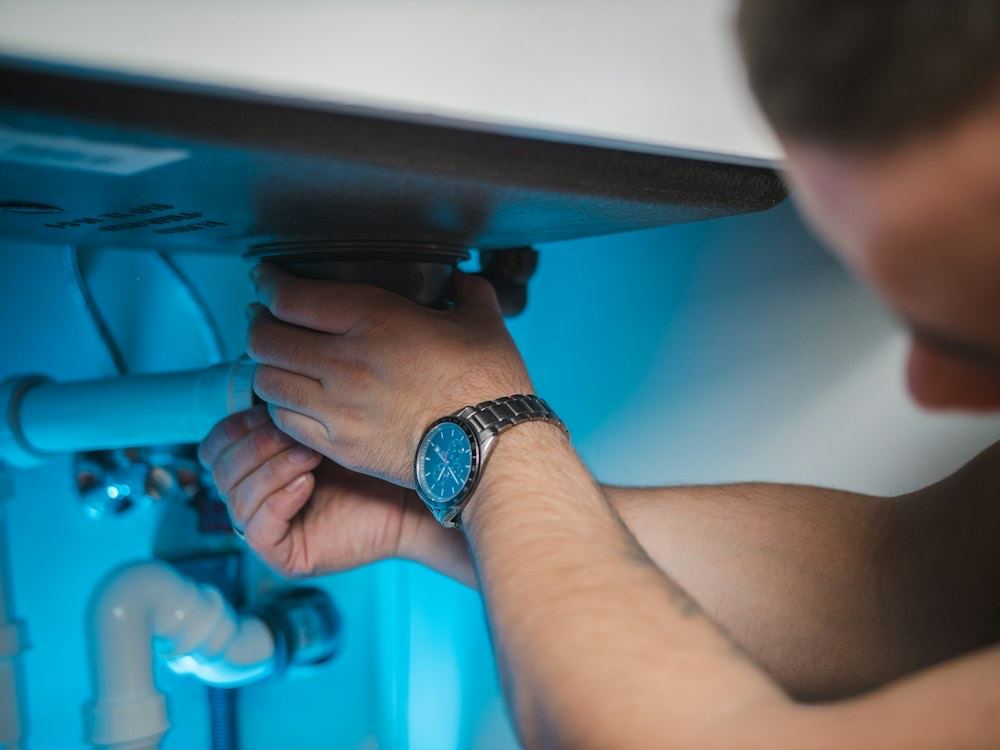
Water heater repair across Westchester for gas and electric units: leaks, pilot lights that won’t stay lit, faulty gas valves and no hot water.
Water heater installation
Water heater installation in Westchester County, including replacing a tank that is failing: gas and electric units sized to your household, installed to code, with the old unit taken away.
Leak detection & repair
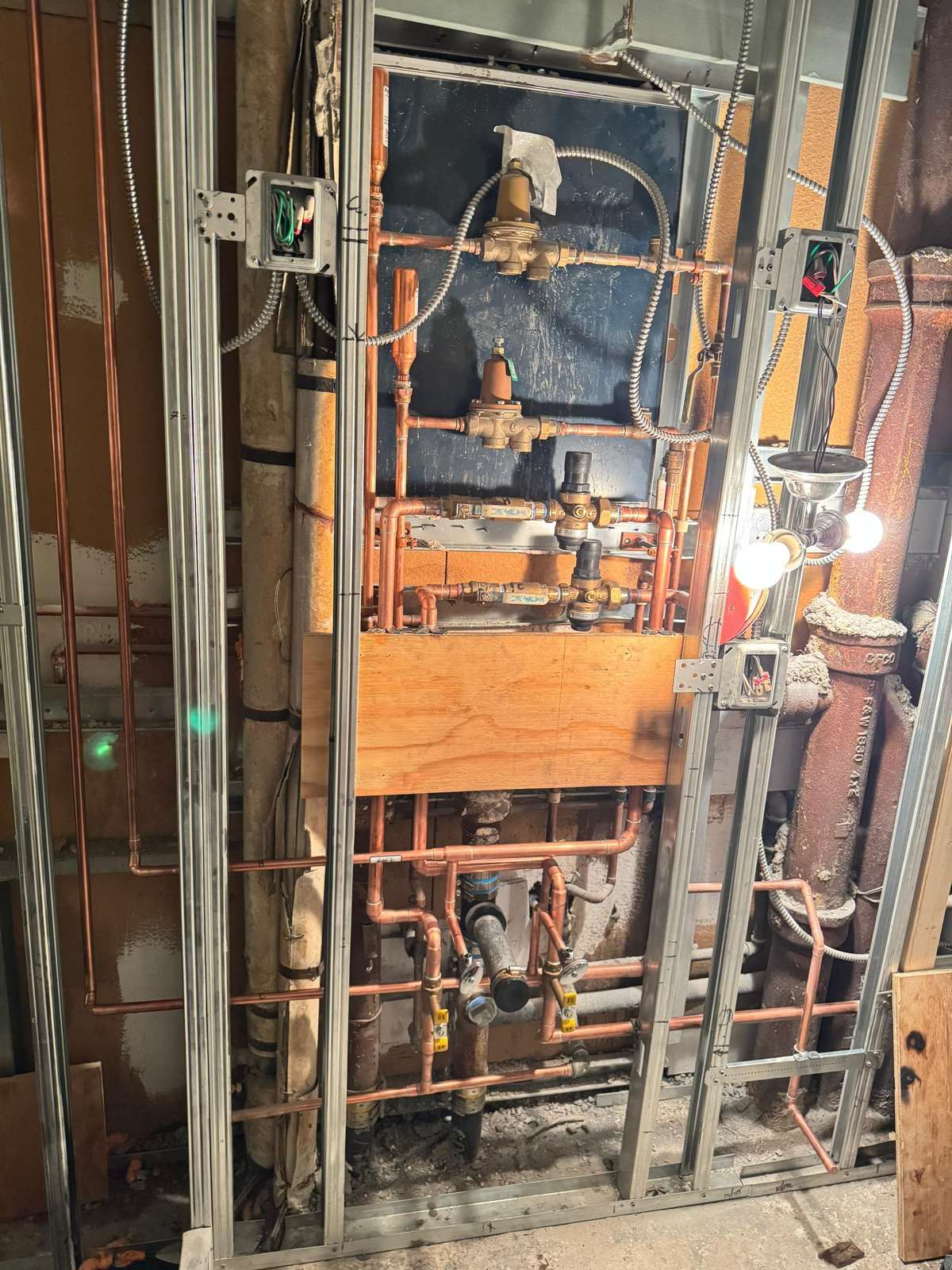
Leak detection across Westchester — the stain on the ceiling, the meter that never stops, the damp patch in the basement. We find where the water is actually coming from, then repair it.
5.0 from 4 customer reviews on Thumbtack
- Top Pro 2025 on Thumbtack
- Background checked
Terrific — smart, professional, honest. Very experienced problem solver. I was very impressed with his skills and troubleshooting ability.
Arrived on time, diagnosed the problem quickly and had everything repaired in no time. The work was clean and professional.
Based in Dobbs Ferry, across lower Westchester
Just outside these towns? Call anyway and we’ll tell you straight whether we can help.