
We replaced the floor hatch in a commercial kitchen
A corroded commercial kitchen floor hatch, replaced and photographed: what the old cover was telling us, why a new lid on its own would not have fixed it, and what the new one has to do.
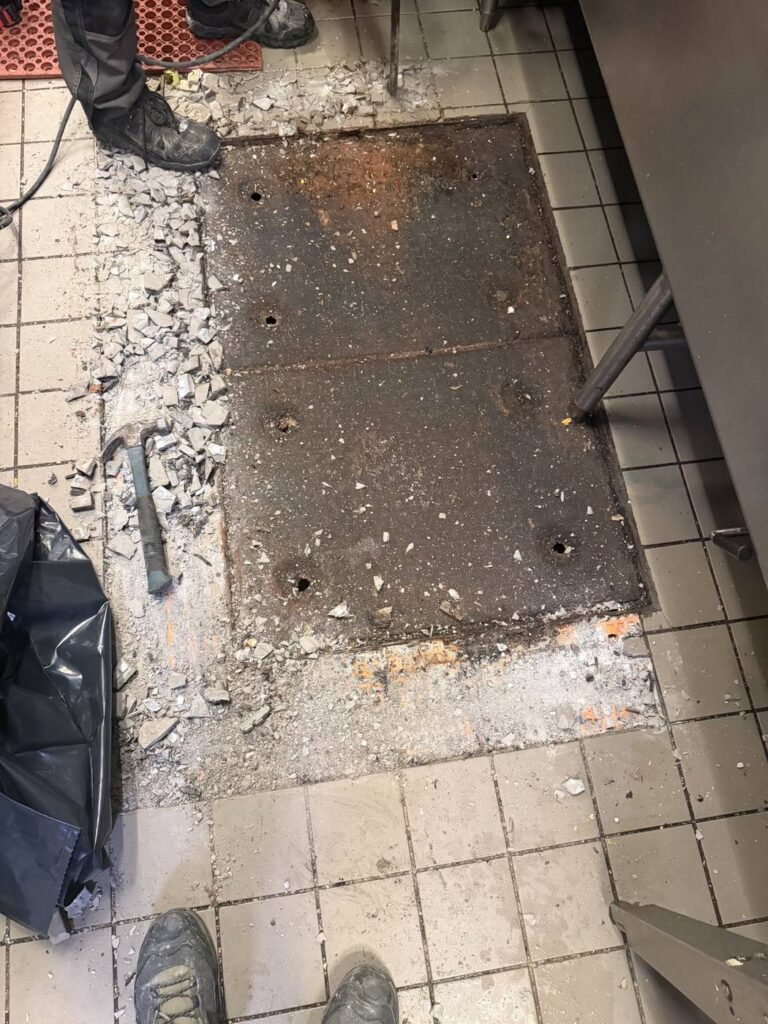
Every commercial kitchen has a floor hatch somewhere and nobody looks at it. A steel cover set into the floor, usually in the worst possible place — under a prep table, in the line everyone walks. It gets mopped over every night and opened once a year, if that.
Then one day it rocks underfoot, or it will not come up at all, and it turns out the thing holding the floor together at that spot stopped working some time ago. These photographs are from one being replaced.
What a commercial kitchen floor hatch has to do
Two jobs, and they pull against each other. It has to open, because whatever runs below the floor there has to be reachable — for snaking, for clearing, for looking at. And it has to seal, because a kitchen floor gets washed down, and neither the wash water nor anything underneath should be able to travel in the wrong direction.
On top of that, a commercial kitchen floor hatch is structural. Staff walk on it, carts cross it, and equipment stands near enough to load its edge. A cover that rocks underfoot is not a cosmetic problem, and one that has rusted thin is a heavy wheel away from being a hole in the floor.
What the old cover was telling us
Look at the first photograph again. The lifting points — the recesses you put a key into to raise the lid — have corroded straight through, and several are now open holes. That is years of wash water sitting in the one part of the cover designed to hold it.
The second thing is the tile. Around the frame it had broken up in a band, which is what happens once the frame itself starts to move: every footstep works it against the bed it was set in, the bond fails, and the grout and tile at the edge go first. By the time the tile is going, the problem is not the lid.
Why a new lid would not have fixed it
The frame is the part that matters in any commercial kitchen floor hatch. It is what is built into the floor: it carries the load, it sets the level, and it is the surface the cover seats on to seal. Drop a new lid onto a corroded frame that has lost its level and you get the same rocking, the same leaking seal, and the same tile breaking up again, only now underneath a new cover. Replacing a commercial kitchen floor hatch properly means replacing the frame with it.
So the frame comes out. The tile and bed get cut back to sound material around the opening, which is the mess in the first photograph, and the new frame is set from scratch.
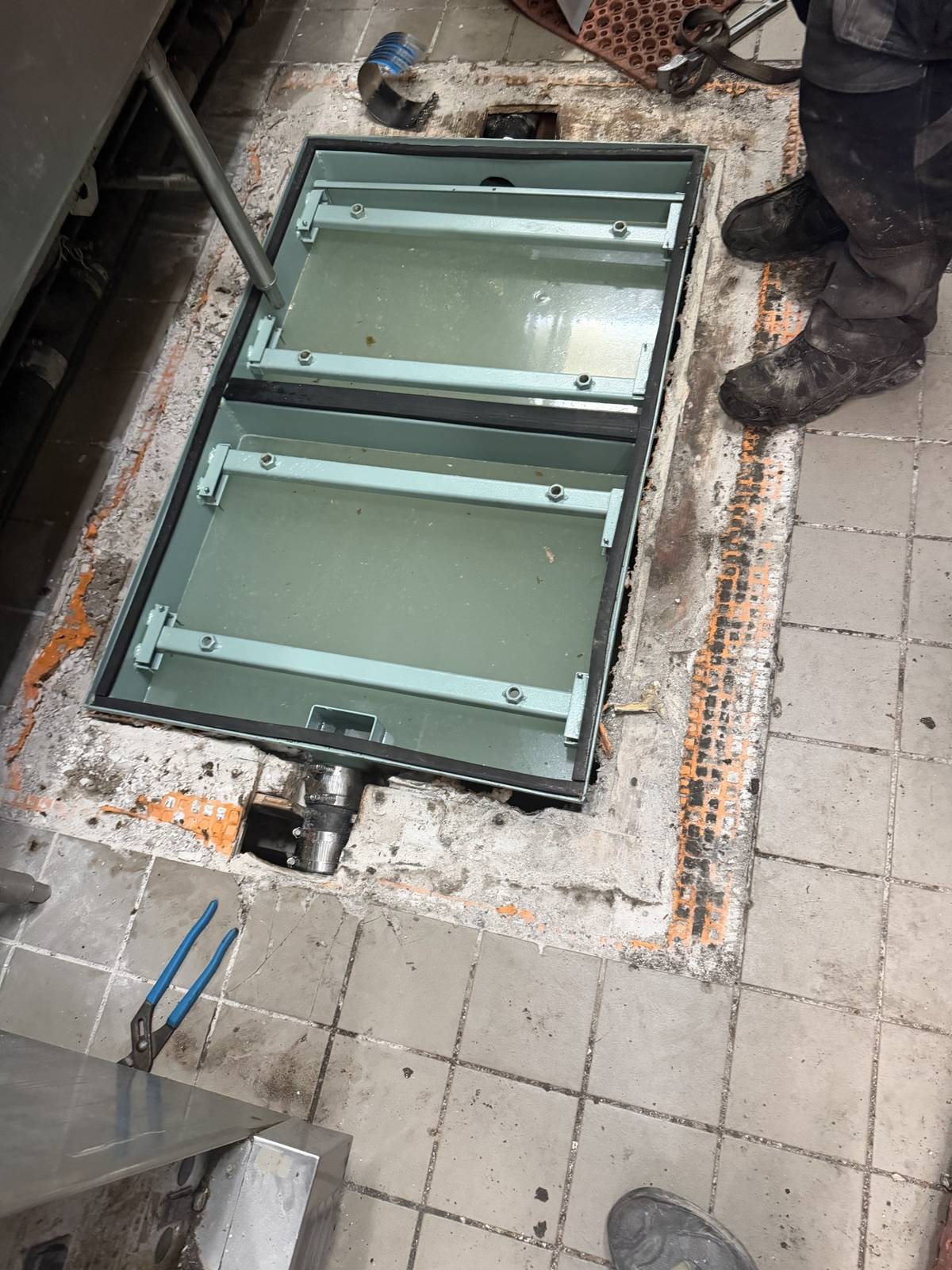
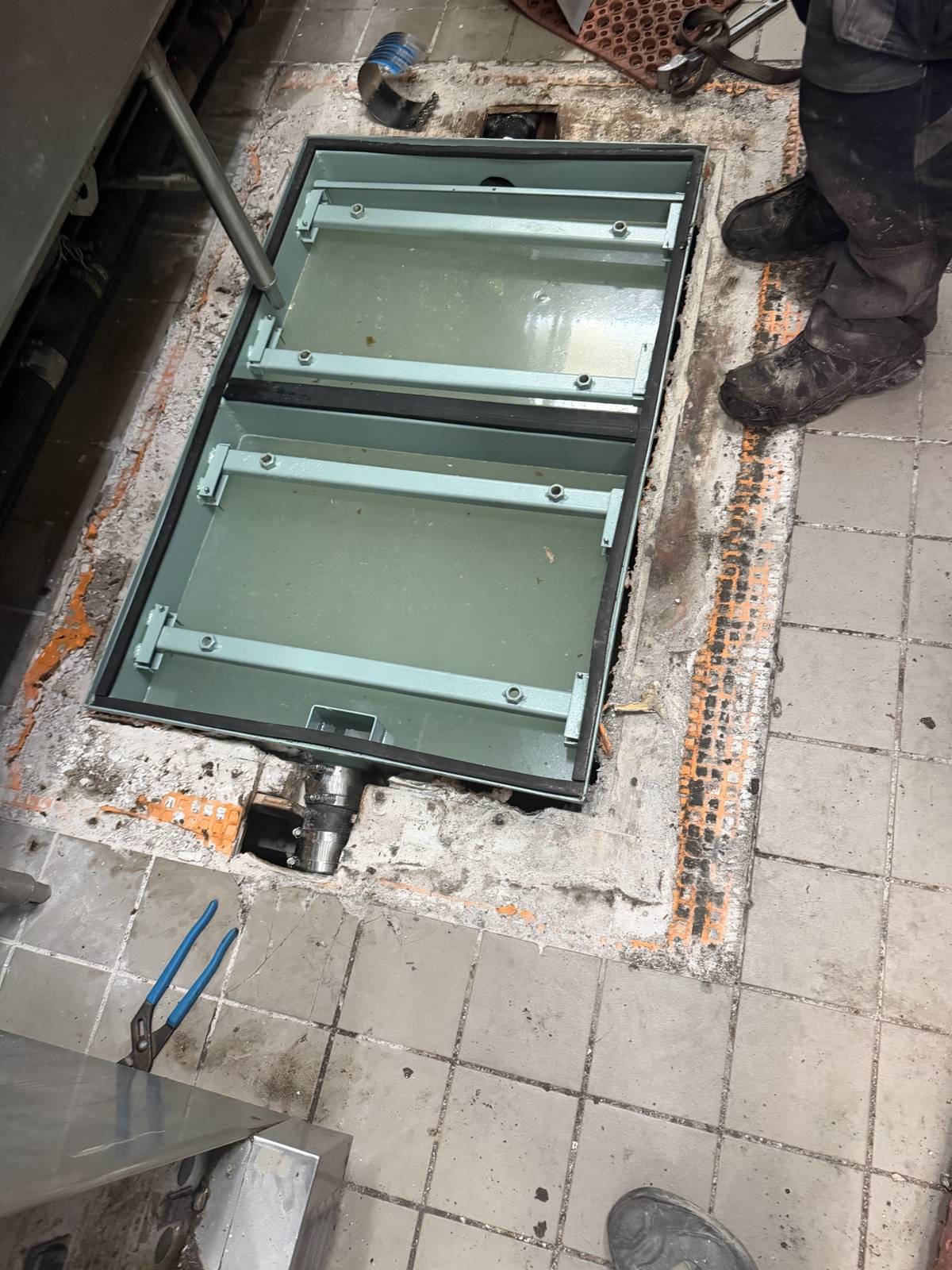
Setting the new frame, and what else gets done while it is open
The frame has to finish level with the tile and follow the fall the floor already has, so that wash water runs across the cover and off it rather than standing on it. Getting that wrong is how the next one starts corroding. It is bedded in properly rather than dropped in and grouted around.
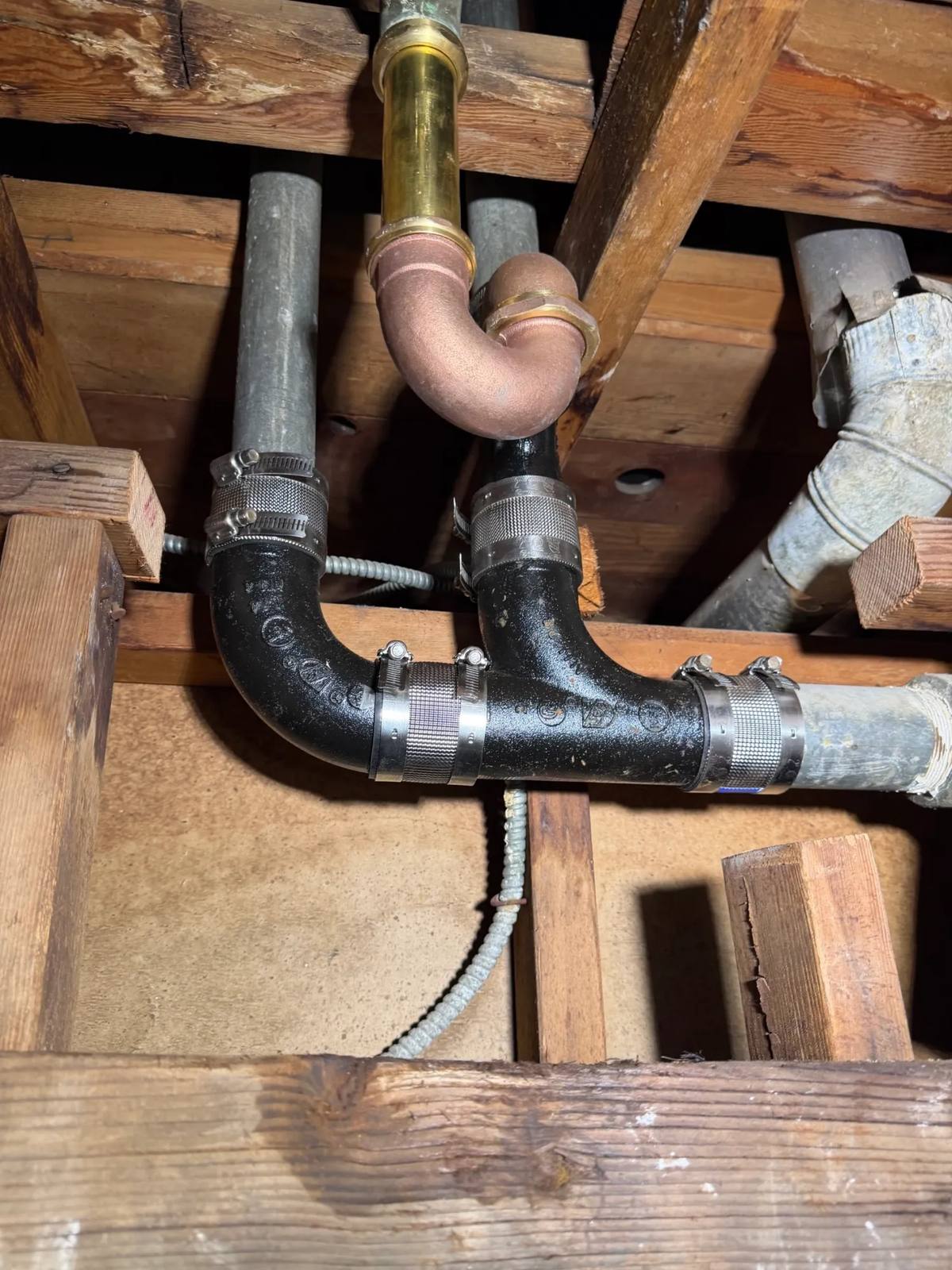
The other thing worth noticing in that photograph is the piping. With the floor open, the drain line below was remade at the same time — new section, shielded couplings either side. Nobody opens a restaurant floor twice if they can help it, so anything down there that is marginal gets dealt with on the same visit rather than becoming its own job in six months.
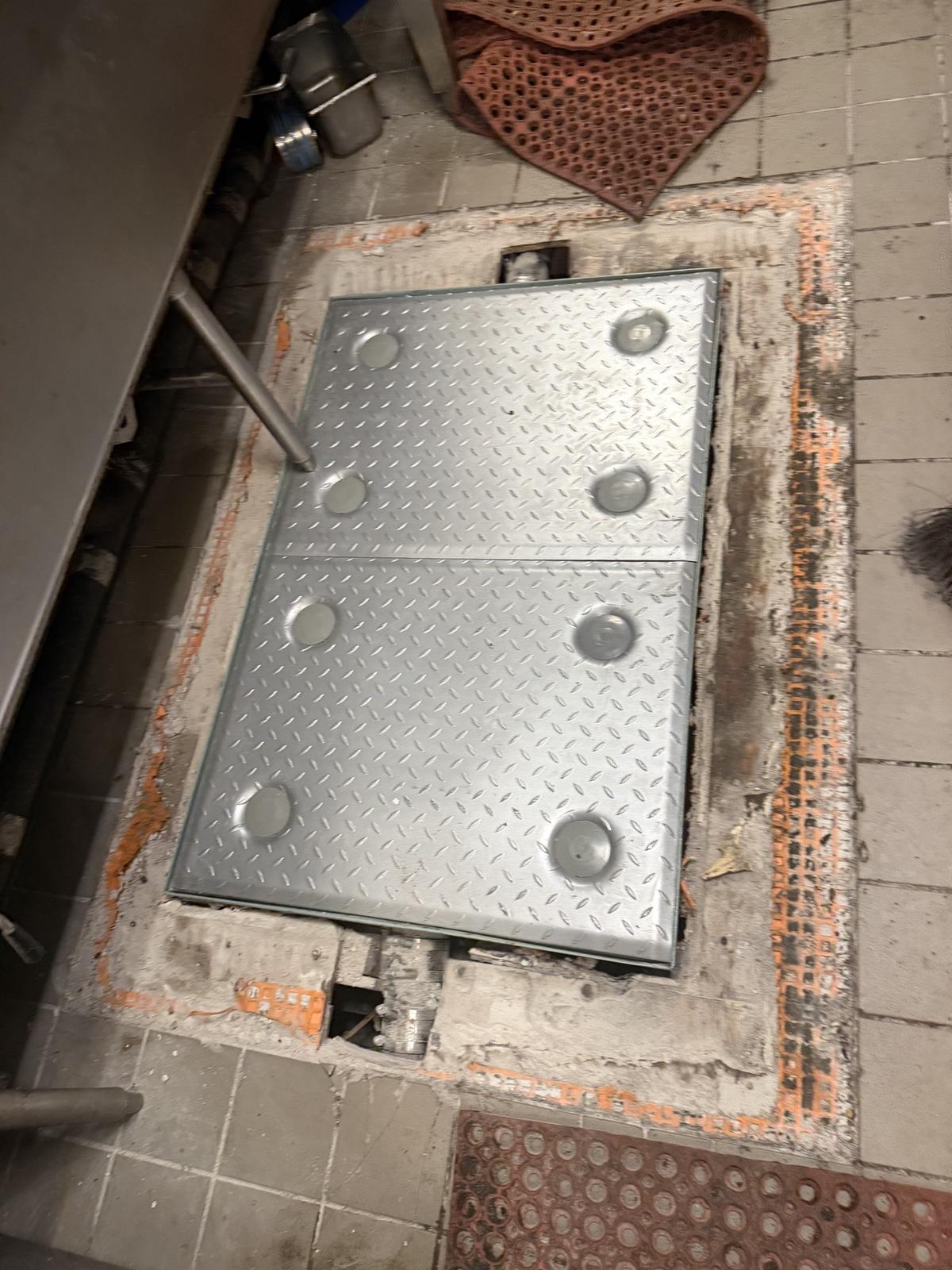
The finished hatch
Diamond plate, two leaves so one half can be lifted at a time in a narrow aisle, and sitting flush with the tile around it. The lifting points are recessed, so there is nothing sticking up for a cart wheel or a toe to catch, and the tile was cut back in around it.
It is a dull photograph, which is the point. A commercial kitchen floor hatch is working properly when nobody in the kitchen has any reason to think about it.
Signs a commercial kitchen floor hatch is failing
- The lid rocks, rings or shifts when someone steps on it
- The lifting points are corroded, bent, or holed through, and you need a bar rather than a key
- Tile or grout is breaking up in a band around the frame
- There is a smell around the cover between cleans, which means the seal has gone
- Water stands on or around the cover after a wash-down instead of running off it
- It has been painted or sealed shut by someone to stop the smell
If what is actually wrong is below the hatch rather than the hatch itself — a line that keeps backing up, or one that drains slower every month — that is drain cleaning and a camera inspection first. Grease-laden lines in particular are usually a hydro jetting job, not an excavation, and we own the jetter rather than subcontracting it.
How this gets scheduled
A commercial kitchen floor hatch replacement means a hole in the floor of a working kitchen, so when it happens matters as much as how. The work is scoped and priced before anything starts, and booked around service rather than through it.
If the building, the landlord or a managing agent needs a certificate of insurance before anyone comes in, we provide it beforehand — that is normal for commercial plumbing and it should never hold up the date. And if a drain backs up mid-service some evening, that is a different phone call and we take it any hour.
Restaurants, delis and commercial kitchens in Dobbs Ferry, Hastings-on-Hudson, Irvington, Yonkers, the business district in White Plains and across lower Westchester: call KBD Plumbing & Heating at (914) 233-3000 — any hour, holidays included.
Services in this article
Commercial & co-op plumbing
Commercial plumbing in Westchester for restaurants, offices, apartment buildings, schools and stores — with a certificate of insurance for your building and 24/7 emergency service.
Drain & sewer cleaning
Drain cleaning across Westchester for kitchen, bathtub, shower, toilet and main-line clogs, with our own sewer camera and hydro-jetter for lines that keep blocking.

Hydro jetting
Hydro jetting for Westchester drains and sewer lines — high-pressure water scours grease, scale and roots off the pipe walls, not just a hole through the clog.
5.0 from 4 customer reviews on Thumbtack
- Top Pro 2025 on Thumbtack
- Background checked
Terrific — smart, professional, honest. Very experienced problem solver. I was very impressed with his skills and troubleshooting ability.
Arrived on time, diagnosed the problem quickly and had everything repaired in no time. The work was clean and professional.

Based in Dobbs Ferry, across lower Westchester
Just outside these towns? Call anyway and we’ll tell you straight whether we can help.