
Boiler maintenance before winter: steam and hot-water systems
What a yearly boiler maintenance visit should cover on steam and hot-water heat, the look-only checks you can make in October, and the signs it needs more than a service.
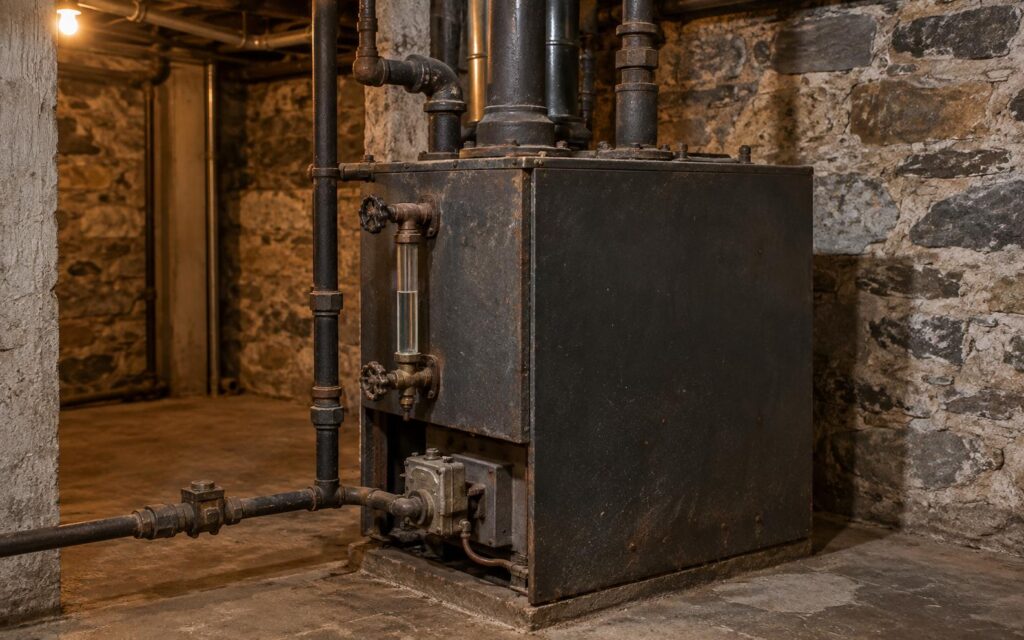
Boiler maintenance is easy to put off in October, when the house is still warm and the boiler has sat quietly since spring. It is also the best month for it: a problem found on a mild afternoon is an appointment, and the same problem on the first freezing night is an emergency. Here is what a yearly service should cover on steam and hot-water systems, and the checks you can make yourself without opening anything.
Boiler maintenance starts with one question: steam or hot water?
The two can look alike, but they need different care, so know which one you have before anyone comes out. Steam heating is still common in older houses here.
- Steam. There is a glass tube on the side of the boiler with water visible in it, called the sight glass, and the pressure gauge reads very low, often close to zero. On a one-pipe system, each radiator has a small air vent that hisses as the heat comes up.
- Hot water. No sight glass. The gauge reads somewhere around 12 to 15 psi with the boiler cold, there is a circulator pump on the piping, and usually an expansion tank close by. Radiators have a small bleed valve instead of a vent.
Boiler maintenance on a hot-water system
Yearly boiler maintenance on a gas-fired hot-water system should cover the burner, the venting and the water side. Ask whoever does the work what they checked; expect something close to this:
- Burner and flame. Cleaned, inspected, and the combustion tested with an analyzer rather than judged by eye.
- Venting. The vent pipe and chimney connection checked for rust, loose joints and blockage, and the draft tested. A blocked vent is one way carbon monoxide gets into a house.
- Safety controls. The high-limit control and the pilot or ignition safety tested, and the pressure relief valve inspected.
- System pressure. The cold pressure read, the fill valve checked and the expansion tank tested. A tank that has lost its air charge lets the pressure climb until the relief valve drips.
- Circulator and air. The pump checked for noise and leaks, and air bled from radiators that stay cold at the top.
- Leaks. Valves, joints and the boiler looked over for weeping and rust trails.
A high-efficiency condensing boiler adds one item: the condensate trap and drain line cleaned, because a blocked trap can shut the boiler down.
Boiler maintenance on a steam system
Steam is a different machine. A house system runs at very low pressure, usually well under 2 psi, and most of the care is about the water level and letting air out so steam can get in. On top of the burner and venting checks above, a steam service should cover:
- The sight glass. Water at the normal line the manufacturer marks, a glass clean enough to read, and a level that sits steady while the boiler steams. A bouncing line points to dirty boiler water.
- The low-water cutoff. Tested and, on the float type, flushed. This is the control that shuts the burner off before the boiler runs dry, and it is one of the most important safety devices on a steam boiler.
- The pressure control. Its setting checked, and the small looped pipe underneath it cleared. When that loop clogs, the control cannot read the pressure.
- Main vents and radiator vents. A vent stuck shut keeps a radiator or a whole run of pipe cold; one stuck open spits water and hisses steam. Failed vents are replaced.
- The water feed. If there is an automatic water feeder, how much it adds over a season shows whether the system is losing water.
Checks you can make yourself in October
None of these involve opening, draining or flushing anything. Hot water and steam scald, so look, write down what you see, and leave the valves alone.
- Clear the space. Nothing stored against the boiler or its vent pipe, and nothing blocking the air openings into the boiler room.
- Read the gauge or the glass. On a hot-water system, note the pressure with the boiler cold. On a steam system, check that water is visible in the sight glass. If the glass looks empty or completely full, do not add or drain water yourself; call before you turn the heat on for the season.
- Look underneath and around it. Puddles, rust streaks, white crust on valves, and any soot or scorching around the burner door or the vent pipe.
- Test the carbon monoxide alarm with its test button, and replace the battery if it takes one.
- Find the emergency switch. It looks like a light switch, often at the top of the basement stairs, and it should be on. See heat not working.
- Run the heat once. On a mild day, turn the thermostat up and listen. The boiler should fire, the radiators should warm, and nothing should bang or hiss steadily. If something does, read banging pipes and water hammer.
Signs it needs more than boiler maintenance
A service will not fix these, so mention them when you call. Each is covered in boiler not working:
- Pressure on a hot-water system that drops over days, or climbs and then dumps.
- A boiler that locks out more than once, or a pilot that will not stay lit.
- Kettling or banging that is new this year.
- Water under the boiler, or a relief valve that drips.
- One radiator cold while the rest heat, which is usually a valve or a vent rather than the boiler. That is radiator and valve work.
If the boiler also makes your hot water and the faucets have gone cold, start with no hot water.
How often, and why before the first cold week
Once a year is the usual interval for boiler maintenance, and the timing matters more than the exact date. A boiler idle since spring tends to show its problems the first day it has to work hard: a stuck vent or a clogged control loop does not show up in August, it shows up on the first cold night. A service while the heat is still optional means anything it finds can be fixed before you need it.
If you smell gas or a carbon monoxide alarm sounds
- Gas smell: leave the house first, and do not touch light switches, phones or appliances on the way out. Once you are outside, call 911 or your gas utility. If Con Edison is your gas utility, the number is 1-800-75-CONED (1-800-752-6633).
- Carbon monoxide alarm: get everyone out, call 911, and do not go back in to look at the boiler.
Once the utility or the fire department has made it safe, the repair side is gas leak repair.
Getting your boiler looked at by KBD
KBD works on gas-fired boilers, steam and hot-water heating, and the radiators and piping connected to them. We are licensed and insured, and the price is agreed before any work starts. When you call about boiler maintenance, tell us whether the system is steam or hot water and what it has been doing. For a fault rather than a checkup, see boiler repair; for a yearly visit that takes in the plumbing too, see our plumbing maintenance plans.
KBD Plumbing & Heating works across lower Westchester — Dobbs Ferry, Hastings-on-Hudson, Irvington, Yonkers, White Plains and the rest. Licensed and insured, price agreed before work starts, and the phone is answered any hour including holidays: (914) 233-3000.
Services in this article
Boiler repair
Boiler repair across Westchester for gas, hot water and steam systems — no heat, no hot water, leaks, noise, pressure loss and boilers that lock out and will not restart.
Heating & radiators
Radiator repair across Westchester: leaking radiators, faulty valves, steam leaks, cold rooms and radiator replacement — for hot water and steam heating systems.
Maintenance plans
Plumbing maintenance plans catch the small problems — the aging tank, the tired sump pump, the slowing drain — before they become floods.
5.0 from 4 customer reviews on Thumbtack
- Top Pro 2025 on Thumbtack
- Background checked
Terrific — smart, professional, honest. Very experienced problem solver. I was very impressed with his skills and troubleshooting ability.
Arrived on time, diagnosed the problem quickly and had everything repaired in no time. The work was clean and professional.

Based in Dobbs Ferry, across lower Westchester
Just outside these towns? Call anyway and we’ll tell you straight whether we can help.